
Raw Cashew Exporter Tanzania: Premium Quality
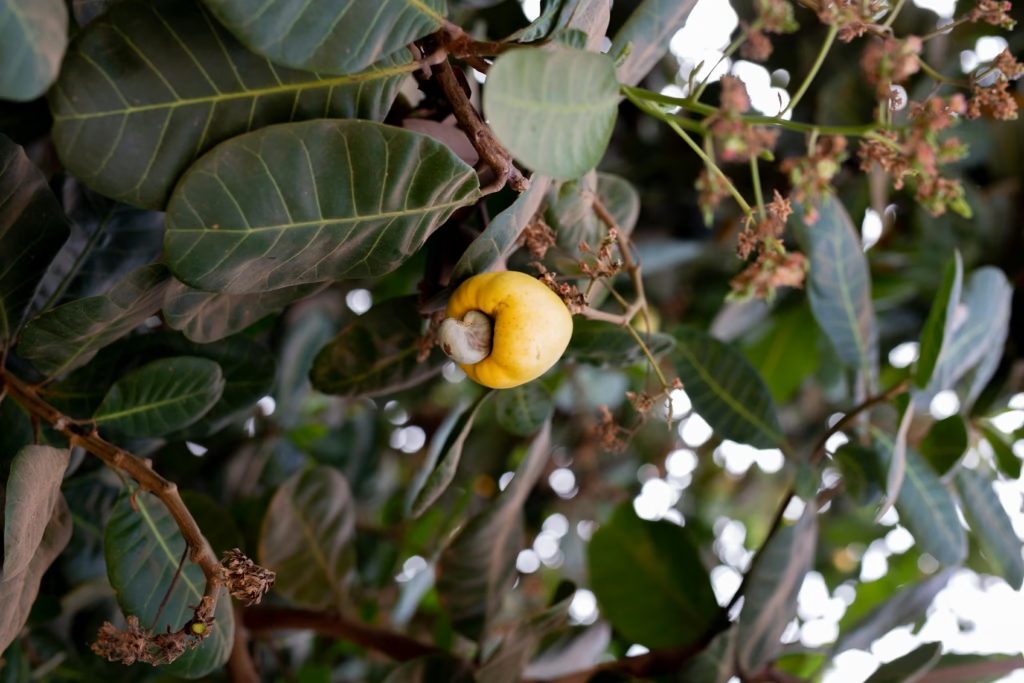
Tanzania has quietly become one of the leading players in the global cashew market, thanks to its fertile land, supportive climate, and hardworking farming communities. Over the past few decades, the country has transformed from a regional producer to a major exporter, supplying raw cashew nuts to countries across Asia, the Middle East, and Europe.
At the heart of this transformation lies the strong contribution of every raw cashew exporter Tanzania — enterprises that bridge the gap between local farmers and international buyers. Their efforts have not only boosted Tanzania’s agricultural exports but have also positioned the nation as a reliable source of high-quality cashew nuts on the global stage.
Table of Contents
The Journey of Cashew Farming in Tanzania
Cashew cultivation in Tanzania dates back to the 16th century when Portuguese traders introduced cashew trees to East Africa. Over the years, the southern regions — particularly Mtwara, Lindi, and Ruvuma — emerged as the country’s cashew belt. These areas have the perfect combination of rainfall, humidity, and fertile soils needed for healthy cashew trees to thrive.
Initially, cashew farming was small-scale and mostly for domestic consumption. However, with the rising global demand for cashew nuts, Tanzania began commercializing the crop in the 1970s. Today, cashew nuts are one of Tanzania’s most valuable export commodities, supporting millions of rural households and contributing significantly to the country’s GDP.
The growth of this industry is inseparable from the work of the raw cashew exporter Tanzania network — companies that source, process, and ship cashews to international markets while ensuring farmers receive fair prices for their harvests.
Why Tanzanian Cashews Stand Out
Cashew nuts from Tanzania are renowned for their high quality, distinctive taste, and rich nutritional value. These nuts have a natural sweetness, firm texture, and large kernel size — qualities that make them ideal for both direct consumption and processing into roasted or flavored cashew products.
Several factors make Tanzanian cashews special:
- Rich Soils and Climate: Tanzania’s southern coastal region offers ideal tropical conditions for cashew trees. The steady rainfall and warm temperatures result in premium-quality nuts.
- Traditional and Sustainable Farming: Most farmers use natural farming techniques without heavy chemicals, making Tanzanian cashews more organic and eco-friendly.
- Strong Post-Harvest Handling: From drying to sorting, Tanzanian cashew exporters maintain strict quality standards to ensure freshness during long-distance transportation.
These strengths explain why the raw cashew exporter Tanzania industry continues to attract international buyers who prioritize both quality and sustainability.
The Economic Importance of Cashew Exports
Cashews are one of Tanzania’s top agricultural exports, alongside coffee, tea, and sesame seeds. According to recent data, Tanzania ranks among the top five cashew exporters in the world. In some years, exports have exceeded 200,000 metric tons, with major buyers including India, Vietnam, and the United Arab Emirates.
This growth has provided thousands of Tanzanian farmers with a stable income and has strengthened the rural economy. The cashew export trade has also encouraged infrastructural development, such as better roads, warehouses, and port facilities.
Every raw cashew exporter Tanzania contributes to this success by ensuring the seamless movement of cashews from farms to international markets, maintaining both quality and timeliness in supply.
The Cashew Export Process in Tanzania
Exporting raw cashews from Tanzania is a detailed process that requires precision, compliance, and care at every step.
- Harvesting and Drying:
Cashew nuts are harvested once the cashew apples naturally fall to the ground. They are then separated from the apples and sun-dried for two to three days to reduce moisture content. - Sorting and Grading:
The nuts are sorted based on size, color, and shell condition. Grading helps ensure uniformity and consistency for international buyers. - Storage and Packaging:
Proper storage is essential to preserve freshness. Cashews are kept in well-ventilated, fumigated warehouses using new gunny bags to prevent mold or insect damage. - Transportation and Export:
Most exports take place through the Port of Mtwara or Dar es Salaam. Processed cashews are also shipped by air through Julius Nyerere International Airport.
Throughout this chain, the Cashewnut Board of Tanzania (CBT) plays a critical role in regulating export standards. Exporters must be registered, obtain export permits, and adhere to strict quality testing before shipping their consignments.
This organized process ensures that every raw cashew exporter Tanzania maintains transparency and consistency, building trust with global partners.
Global Markets for Tanzanian Cashews
Tanzania’s cashew nuts are primarily exported to Asia, where countries like India and Vietnam process them for global distribution. However, new markets have been emerging in Europe and the Middle East.
Buyers in the United Arab Emirates, the Netherlands, and Germany value Tanzanian cashews for their rich flavor and quality. As the demand for plant-based snacks and healthy fats grows worldwide, cashew consumption is increasing, giving Tanzanian exporters an even greater opportunity to expand their reach.
The raw cashew exporter Tanzania community is therefore not just an agricultural contributor but a key player in global food security and trade diversity.
Quality Assurance and Sustainability
One of the biggest strengths of Tanzania’s cashew industry is its commitment to quality and sustainability. Farmers and exporters alike follow strict agricultural and processing standards to meet international requirements.
After harvest, cashews undergo moisture and purity testing to ensure they meet export-grade quality. Many exporters also collaborate with independent laboratories to check for aflatoxins and other contaminants.
In addition, Tanzania has been promoting eco-friendly farming through out-grower programs, helping farmers use better seeds and sustainable cultivation techniques. These programs mirror the principles followed by global agricultural leaders who focus on traceability, transparency, and ethical sourcing.
Companies like Ahar Group have been instrumental in maintaining these standards. As one of the dedicated exporters supporting local farmers, Ahar Group ensures that every batch of cashews meets global expectations — combining modern logistics with ethical business practices to uphold Tanzania’s image as a trusted supplier.
Challenges in the Cashew Industry
Despite its progress, the Tanzanian cashew industry still faces a few challenges:
- Limited Local Processing:
Most of Tanzania’s cashew nuts are exported raw instead of being processed locally. This reduces value addition and employment opportunities. - Price Fluctuations:
Global market prices often vary due to changes in demand or weather conditions affecting crop yields. - Infrastructure Constraints:
Although improving, transportation and storage facilities in rural areas still need further development.
Nevertheless, these challenges are being addressed through government reforms and private-sector investments. With more local processing plants under construction and better export incentives, the outlook for every raw cashew exporter Tanzania remains highly promising.
Opportunities for Growth and Investment
The growing global demand for healthy snacks, vegan foods, and natural oils has created new opportunities for Tanzania’s cashew industry. Cashew kernels, oils, and by-products such as shells can all be processed into valuable commodities.
Investors can benefit from Tanzania’s strategic location, stable political environment, and access to global trade routes through ports and free trade agreements. Exporters who prioritize sustainable sourcing and digital traceability systems are likely to dominate the next phase of growth.
In this evolving landscape, Ahar Group and other leading exporters are showing how innovation and responsibility can coexist in agribusiness. By integrating technology, quality control, and fair trade, they set new benchmarks for what it means to be a reliable raw cashew exporter Tanzania.
Conclusion
The rise of Tanzania’s cashew industry is a story of resilience, dedication, and opportunity. From humble farms in the southern regions to ports that connect Africa to the rest of the world, the journey of a cashew nut reflects the nation’s progress and global relevance.
Every raw cashew exporter Tanzania plays a vital role in sustaining this success — empowering farmers, strengthening trade networks, and ensuring that the world enjoys the finest cashews nature can offer.
With continued investment, innovation, and partnerships through trusted names like Ahar Group, Tanzania’s cashew export industry is not only growing but redefining Africa’s role in global agricultural trade.