
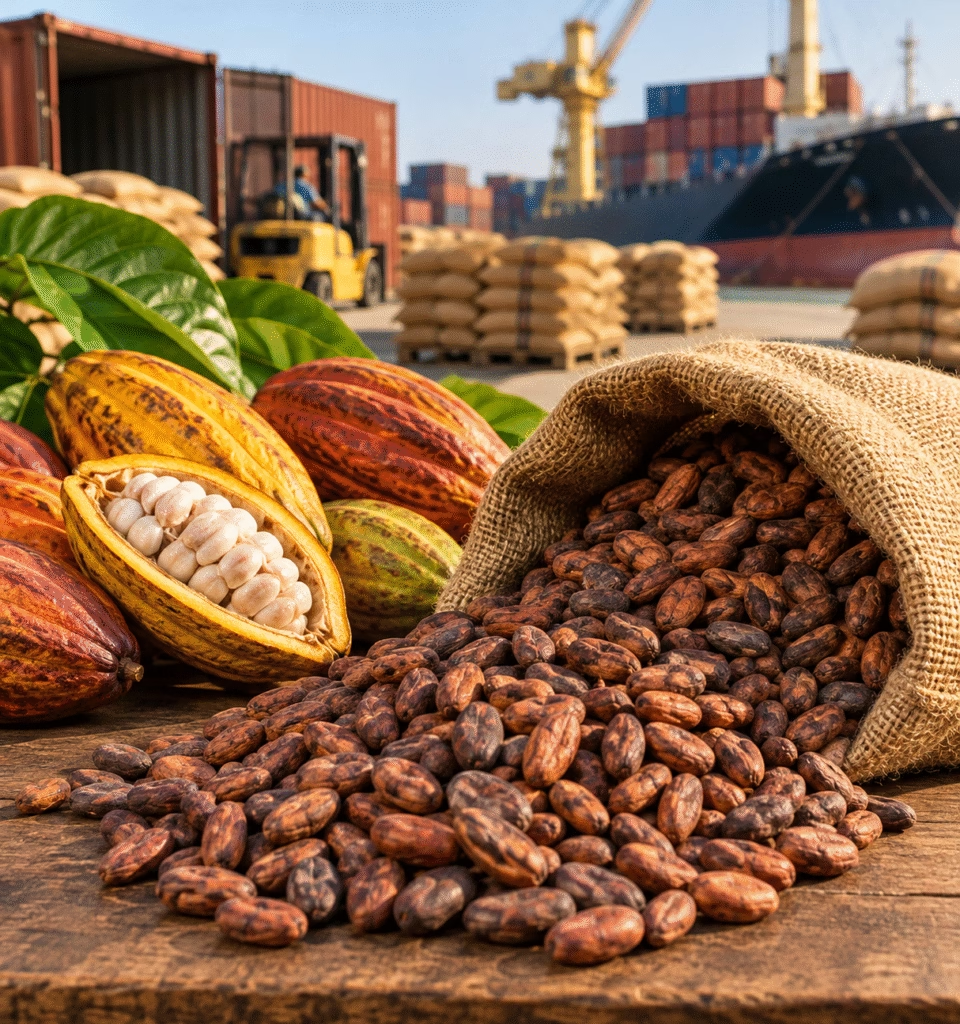
Nigeria has a long history of cocoa cultivation and remains an important participant in the global cocoa trade. Cocoa beans are a valuable agricultural commodity used to manufacture chocolate, cocoa powder, cocoa butter, confectionery products, and other food ingredients. With international demand for cocoa continuing to support agricultural trade, reliable sourcing and careful post-harvest handling are essential for businesses looking to purchase quality cocoa beans.
For importers, manufacturers, wholesalers, and commodity traders, choosing a dependable Cocoa Exporter Nigeria can help simplify procurement, maintain product consistency, and establish long-term supply relationships. Ahar Group aims to support agricultural trade by emphasizing responsible sourcing, quality-focused handling, and dependable communication with business partners.
This article explores Nigeria’s cocoa industry, cocoa varieties and uses, export preparation, quality requirements, and the factors buyers should consider when selecting a cocoa supplier.
Table of Contents
Cocoa Cultivation in Nigeria
Cocoa is a tropical crop that grows best in warm, humid environments with suitable rainfall, well-drained soil, and adequate shade during the early stages of growth. These conditions are available in several parts of southern Nigeria, where cocoa cultivation supports farming households and contributes to agricultural commerce.
Cocoa farming has traditionally been an important activity in states such as Ondo, Cross River, Osun, Ekiti, Ogun, and Oyo. Many farms are managed by smallholder farmers who depend on cocoa production as a source of income.
The cocoa production process requires patience and careful management. Cocoa trees take several years to begin producing commercially useful quantities of pods. Farmers must also manage pests, diseases, soil fertility, and harvesting schedules to maintain productive plantations.
Once harvested, cocoa pods are opened to remove the beans and their surrounding pulp. These beans then undergo fermentation and drying before they are prepared for storage, sale, or export.
For buyers searching for a dependable Cocoa Exporter Nigeria, understanding the origin and handling of cocoa beans is an important first step toward evaluating product quality.
Why Nigeria Is an Important Cocoa-Sourcing Destination
Nigeria offers international buyers access to an established cocoa-growing sector and agricultural supply networks that connect farmers, collectors, traders, and exporters.
Several factors make the country relevant to cocoa procurement.
Established Farming Communities
Cocoa cultivation provides livelihoods for farming communities across major growing areas. Local knowledge of harvesting, fermentation, and drying contributes to the development of the country’s cocoa supply chain.
Opportunities for Direct Sourcing
Working with organized sourcing networks can help exporters obtain cocoa beans from producing areas and understand how the crop has been handled before shipment.
Potential for Value Addition
Cocoa can be sold as dried raw beans or processed into products such as cocoa liquor, cocoa butter, and cocoa powder. Expanding local processing can create additional value and employment opportunities.
Access to International Markets
Exporters can connect Nigerian cocoa producers with chocolate manufacturers, ingredient suppliers, and commodity traders in different regions. Reliable documentation, product testing, and logistics are important for maintaining these commercial relationships.
These opportunities make Nigeria relevant to buyers seeking agricultural commodities from West Africa.
Ahar Group: Supporting the Cocoa Supply Chain
Ahar Group works within agricultural commodity trading and supply chains, with an emphasis on product quality, sourcing relationships, and customer requirements.
For businesses considering a Cocoa Exporter Nigeria, it is important to work with a supplier that understands the commercial requirements of international trade. Buyers need clear specifications, reliable communication, appropriate packaging, and careful coordination throughout the procurement process.
Ahar Group’s approach focuses on building business relationships around these priorities. Understanding the buyer’s intended application helps determine the appropriate product grade, quality parameters, packaging format, and shipment arrangements.
For example, a chocolate manufacturer may prioritize fermentation quality, bean size, flavour characteristics, and defect levels. A commodity trader may also consider moisture content, pricing, shipment volume, and delivery schedules.
By discussing these requirements before an order is finalized, buyers and suppliers can establish clearer expectations and reduce the risk of misunderstandings.
Product availability, origin, and export arrangements should be confirmed directly with the supplier before a commercial commitment is made.
How Cocoa Beans Are Harvested and Processed
Cocoa quality depends heavily on what happens after the pods are harvested. Even beans from healthy trees can lose value if fermentation, drying, or storage is handled incorrectly.
The process generally involves several stages.
Harvesting and Pod Opening
Farmers harvest mature cocoa pods and open them carefully to remove the beans. Selecting ripe pods helps provide suitable raw material for fermentation.
Fermentation
Fresh cocoa beans are fermented in boxes, baskets, or other suitable systems. During fermentation, natural biochemical changes help develop the flavour precursors needed for chocolate production.
The duration depends on cocoa variety, batch size, environmental conditions, and the method used. Inadequate fermentation can affect flavour development, while poor handling can create quality defects.
Drying
After fermentation, beans are dried to reduce moisture and improve storage stability. Drying may take place on raised platforms, drying surfaces, or through suitable mechanical systems.
Beans must be dried evenly without contamination from soil, rainwater, smoke, or other foreign materials.
Sorting and Inspection
Before packing, cocoa beans may be inspected to identify damaged beans, foreign matter, excessive defects, or other issues. Buyers can request specific grading parameters according to their processing requirements.
Storage and Dispatch
Properly dried beans are stored in clean, dry conditions before shipment. Good handling helps preserve quality during transportation and reduces the likelihood of mould development.
Quality Standards for Export-Ready Cocoa Beans
International buyers evaluate cocoa beans using several parameters. The precise requirements depend on the destination market, buyer contract, and intended use.
Common quality checks include:
- Moisture content: Excess moisture can increase the risk of mould and deterioration.
- Bean count and size: These measurements help buyers understand the physical characteristics of a batch.
- Fermentation quality: Proper fermentation contributes to the flavour characteristics required by chocolate manufacturers.
- Defective beans: Slaty, mouldy, germinated, or otherwise defective beans may affect the usability and value of a shipment.
- Foreign matter: Stones, plant debris, and other contaminants should be controlled.
- Odour and appearance: Unusual smells, visible mould, or signs of poor storage require investigation.
- Traceability: Information about sourcing and handling can help buyers assess the supply chain.
Specifications should be agreed upon before purchasing. A supplier should not promise a particular grade, certification, or laboratory result unless it has been verified for the relevant shipment.
A professional Cocoa Exporter Nigeria should be able to discuss these parameters clearly and explain how product quality is evaluated.
Packaging, Storage, and Transportation
Packaging and logistics are essential parts of cocoa export operations. Poor handling can undermine the quality achieved during fermentation and drying.
Cocoa beans are commonly transported in suitable food-grade bags or other approved bulk packaging formats, depending on the buyer’s requirements and shipping arrangements.
Before loading, exporters and logistics partners should ensure that:
- Beans are sufficiently dry for the agreed specifications.
- Packaging is clean, strong, and suitable for the product.
- Storage areas are protected against rain and excessive humidity.
- Containers are clean, dry, and free from strong or contaminating odours.
- Bags are handled carefully to prevent tearing and product loss.
- Commercial documents and shipment details match the consignment.
International buyers should also confirm the required certificates, customs documentation, phytosanitary requirements where applicable, and destination-specific food safety regulations.
Working with an experienced Cocoa Exporter Nigeria can help buyers coordinate these requirements before the cargo is dispatched.
Why Choose Ahar Group?
Selecting a cocoa supplier is a business decision that can affect production schedules, product quality, and overall procurement costs.
Ahar Group emphasizes several principles that matter in agricultural commodity trading.
Quality-focused sourcing: Product specifications should be established clearly before an order is confirmed.
Professional communication: Buyers need accurate information about availability, pricing, documentation, and delivery arrangements.
Supply-chain coordination: Procurement, storage, packing, and transportation need to be managed as connected stages.
Buyer-oriented solutions: Different manufacturers and traders have different requirements, so product selection and commercial terms should reflect the intended use.
Long-term relationships: Consistent communication and realistic commitments help build trust between suppliers and international customers.
Businesses evaluating a Cocoa Exporter Nigeria should discuss their volume requirements, preferred quality parameters, packaging needs, destination, and delivery schedule with Ahar Group before proceeding.
Conclusion
Nigeria’s cocoa industry offers opportunities for farmers, processors, traders, and international buyers. From harvesting and fermentation to grading, packaging, and shipping, every stage influences the quality and commercial value of cocoa beans.
For businesses sourcing cocoa, a dependable supplier should provide clear specifications, transparent communication, suitable quality checks, and careful shipment coordination.
Ahar Group aims to support agricultural trade through quality-focused sourcing and customer-oriented service. Buyers interested in working with a Cocoa Exporter Nigeria should confirm current product availability, specifications, pricing, and export arrangements before placing an order.
With careful procurement and stronger supply-chain relationships, Nigerian cocoa can continue to serve the diverse needs of global food manufacturers and cocoa processors.




Add comment